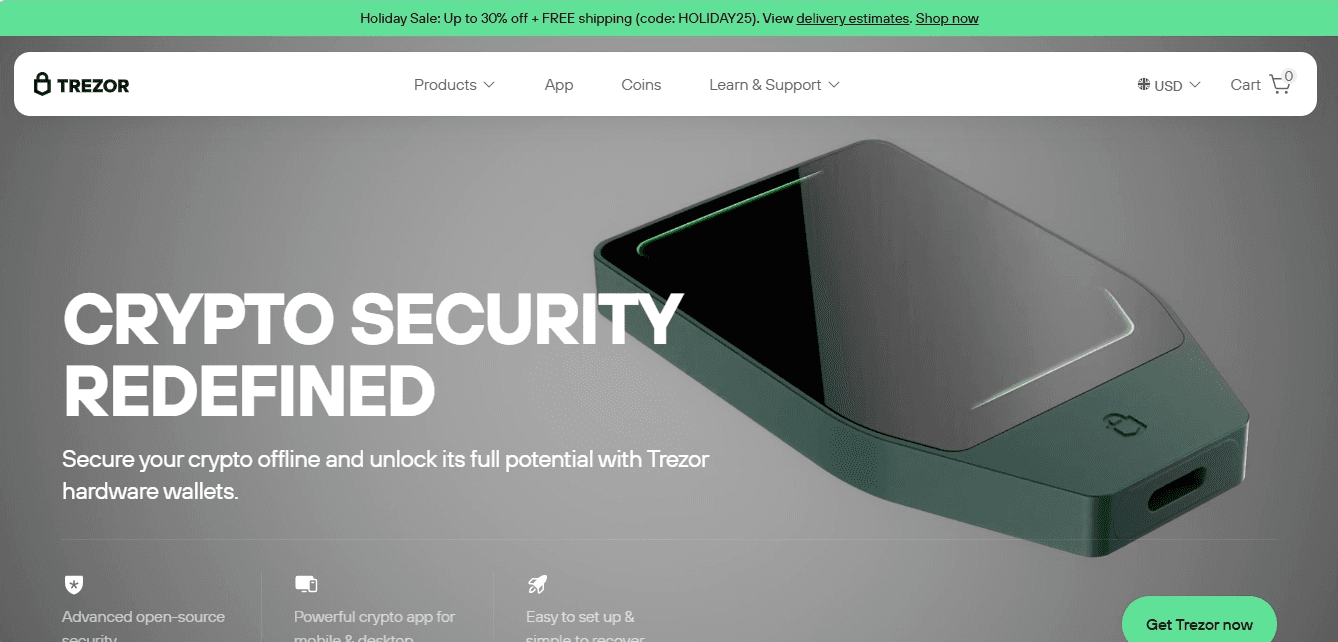
Trezor Suite: Complete Guide to Secure Crypto Management and Wallet Access
Trezor Suite is the official desktop and web interface designed to work seamlessly with Trezor hardware wallets. It provides users with a secure, intuitive, and powerful environment to manage cryptocurrencies while maintaining full ownership of private keys. Built with privacy, transparency, and security at its core, Trezor Suite allows users to store, send, receive, and manage digital assets without relying on centralized intermediaries.
This guide explains what Trezor Suite is, how it works, how to use it safely, and how it fits into the broader concept of self-custody. Whether you are new to hardware wallets or an experienced crypto user, understanding Trezor Suite is essential for managing your assets securely.
What Is Trezor Suite?
Trezor Suite is the official software interface for Trezor hardware wallets. It acts as a bridge between your Trezor device and the blockchain networks you interact with. While your private keys are stored securely on the hardware wallet itself, Trezor Suite allows you to view balances, initiate transactions, manage accounts, and configure security settings.
Unlike centralized platforms, Trezor Suite does not hold your funds or private keys. All sensitive operations are confirmed directly on the physical Trezor device, ensuring that your assets remain protected even if your computer is compromised.
Why Trezor Suite Is Important
Trezor Suite plays a critical role in the self-custody ecosystem by offering a secure, transparent, and user-friendly interface for managing cryptocurrencies. Its importance lies in several key areas:
It keeps private keys offline at all times
It reduces reliance on third-party custodians
It provides clear transaction verification on a trusted device
It offers privacy-focused features for advanced users
By using Trezor Suite with a hardware wallet, users significantly reduce the risk of hacking, phishing, and malware-based attacks.
Getting Started with Trezor Suite
Installing Trezor Suite
To begin using Trezor Suite, users install the application on their computer or access the official web interface. The desktop version is recommended for enhanced security and performance.
Once installed, Trezor Suite guides users through connecting their Trezor hardware wallet via USB. The software automatically detects the device and prompts the user to continue setup or unlock an existing wallet.
Connecting Your Trezor Device
When you connect your Trezor device to Trezor Suite:
Plug the device into your computer
Open Trezor Suite
Unlock the device using your PIN
Confirm any prompts on the device screen
All sensitive actions, including unlocking accounts and signing transactions, require physical confirmation on the Trezor device. This ensures that no transaction can occur without your explicit approval.
Understanding Wallet Access in Trezor Suite
Trezor Suite does not use traditional usernames or passwords. Instead, access is controlled by:
Your Trezor hardware wallet
Your PIN code
Your recovery seed (for backup purposes only)
This approach eliminates the risks associated with password reuse, database breaches, and centralized account logins.
The Role of the Recovery Seed
When setting up a Trezor device, users generate a recovery seed consisting of 12, 18, or 24 words. This seed is the ultimate backup of your wallet.
Important points about the recovery seed:
It must be written down and stored offline
It should never be shared with anyone
Anyone with access to it can fully control your funds
Trezor does not store or know your seed
Trezor Suite will never ask you to type your recovery seed into your computer during normal operation.
Trezor Suite Dashboard Overview
Once logged in, the Trezor Suite dashboard provides a comprehensive overview of your crypto portfolio. The dashboard typically displays:
Total portfolio value
Individual asset balances
Account history
Recent transactions
The interface is designed to be clear and informative while avoiding unnecessary complexity.
Managing Multiple Accounts
Trezor Suite allows users to create and manage multiple accounts for the same cryptocurrency. This can be useful for organizing funds, separating personal and business assets, or improving privacy.
Each account operates independently and requires confirmation on the hardware device for transactions.
Sending Cryptocurrency with Trezor Suite
Sending crypto through Trezor Suite involves several secure steps:
Select the asset and account
Enter the recipient address and amount
Review transaction details in Trezor Suite
Confirm the transaction on the Trezor device screen
The final confirmation on the device ensures that even if your computer is compromised, the transaction cannot be altered without your knowledge.
Receiving Cryptocurrency
Receiving funds is straightforward and secure:
Select the asset and account
Generate a receiving address
Verify the address on the Trezor device screen
Share the verified address with the sender
Verifying the address on the device protects against clipboard malware or address replacement attacks.
Privacy Features in Trezor Suite
Trezor Suite places a strong emphasis on user privacy. Features include:
Optional privacy-enhanced network routing
Minimal data sharing
Transparent open-source design
These features give users greater control over how their information is handled and reduce unnecessary exposure.
Built-In Exchange and Trading Tools
Trezor Suite includes integrated exchange and swap features that allow users to exchange cryptocurrencies directly within the interface. These services are accessed through third-party providers but remain non-custodial.
All exchange transactions still require confirmation on the hardware device, ensuring that control over funds never leaves the user.
Portfolio Tracking and Insights
Trezor Suite provides tools for tracking portfolio performance over time. Users can view:
Asset allocation
Transaction history
Price movements
These tools help users stay informed without needing to move assets to external platforms.
Advanced Settings and Customization
Advanced users can access additional settings within Trezor Suite, including:
Custom network configuration
Fee management options
Account labeling
Passphrase protection
These options allow users to tailor their wallet setup to their specific security and privacy needs.
Passphrase Protection Explained
Passphrase protection adds an extra layer of security on top of your recovery seed. When enabled, each unique passphrase creates a separate hidden wallet.
Benefits of passphrase protection:
Protects funds even if the recovery seed is compromised
Allows creation of decoy wallets
Enhances long-term security
Passphrases must be remembered exactly; losing a passphrase means losing access to that wallet.
Firmware Updates Through Trezor Suite
Trezor Suite notifies users when firmware updates are available for their hardware wallet. Firmware updates improve security, add features, and fix vulnerabilities.
Updating firmware requires:
Physical access to the Trezor device
Confirmation on the device screen
This ensures updates cannot be installed remotely without user consent.
Common Issues and Troubleshooting
Some users may encounter issues when using Trezor Suite, such as:
Device not detected
Incorrect PIN entry
Network synchronization delays
Unsupported tokens
Most issues can be resolved by checking connections, updating software, or reviewing device prompts carefully.
Security Best Practices for Trezor Suite
To maintain maximum security:
Always verify transaction details on the device screen
Keep your recovery seed offline and private
Use a strong, unique PIN
Consider enabling passphrase protection
Keep Trezor Suite and device firmware up to date
These practices significantly reduce the risk of asset loss.
Using Trezor Suite on Shared or Public Computers
While Trezor Suite is designed to be secure, users should avoid using it on untrusted or public computers whenever possible. If unavoidable:
Never enter your recovery seed
Log out after each session
Verify all details on the hardware device
The hardware wallet provides strong protection, but caution is always recommended.
Self-Custody and Responsibility
Using Trezor Suite means practicing true self-custody. This gives users full control but also full responsibility. There is no password recovery service and no centralized authority that can reverse transactions.
Understanding this responsibility is essential for long-term crypto ownership.
Long-Term Storage and Use
Trezor Suite is suitable for both long-term holding and active management of digital assets. Users can:
Securely store crypto for years
Periodically send or receive funds
Monitor portfolio growth
Maintain full independence from centralized platforms
This flexibility makes Trezor Suite a powerful tool for a wide range of users.
Final Thoughts
Trezor Suite is a cornerstone of secure cryptocurrency management. By combining a transparent software interface with a robust hardware wallet, it allows users to interact with the crypto ecosystem without sacrificing security or control.
Through careful setup, strong security practices, and responsible self-custody, Trezor Suite empowers users to manage digital assets confidently and independently. Whether you are safeguarding long-term investments or actively managing your portfolio, Trezor Suite provides a reliable and secure environment built around user ownership and trust.